
Oil and Gas Cost Control Software: From LOE, AFE, and Field Costs to Better Operating Visibility

Summary
×Cost Control Starts With Context
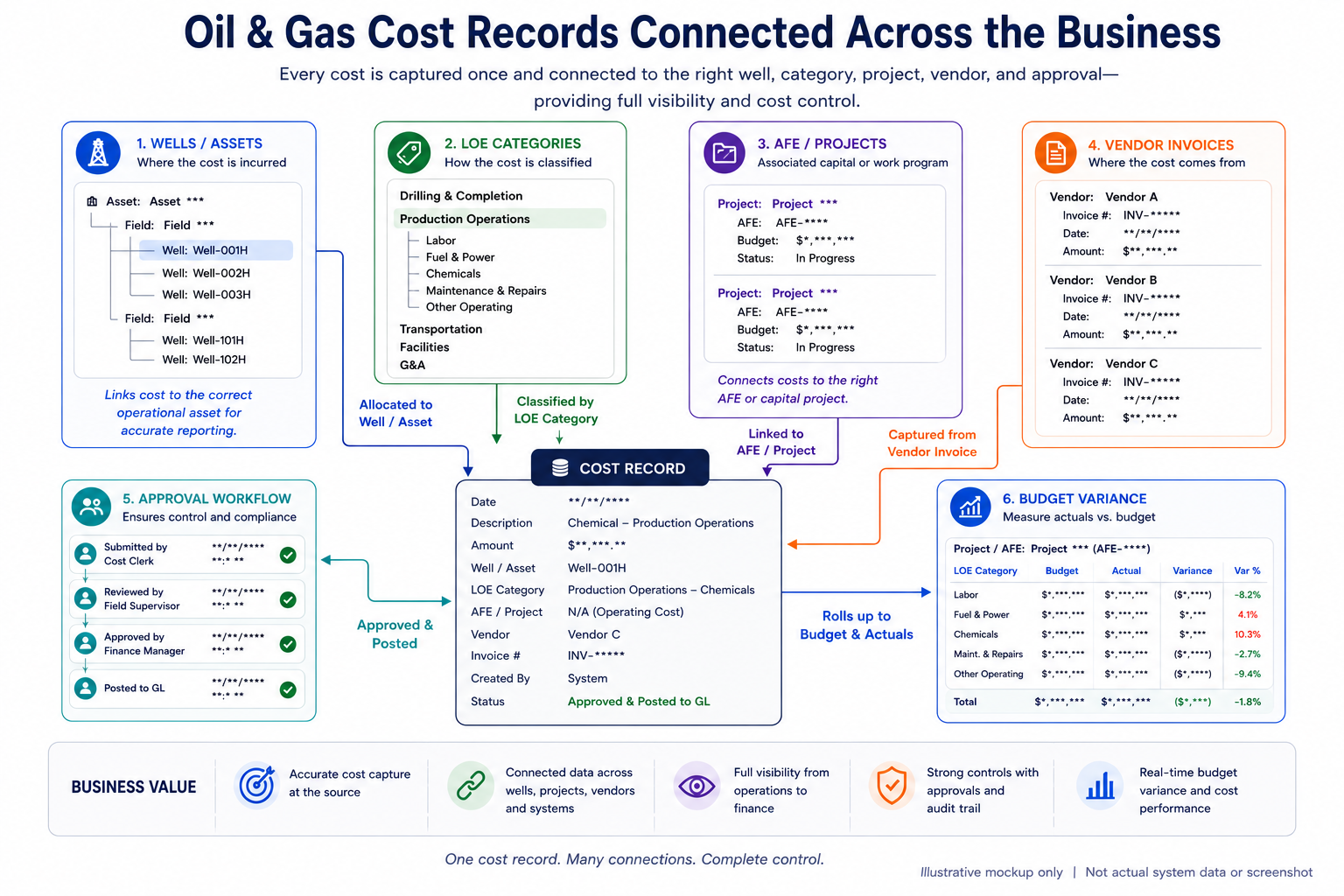
Oil and gas costs are tied to wells, leases, vendors, field activity, production behavior, and project work. A cost number alone rarely tells the full story. A repair invoice, disposal charge, chemical expense, or equipment rental cost may be reasonable in one operating context and questionable in another.
When costs are tracked only by amount and vendor, teams may miss the operational reason behind movement. A cost increase may be driven by workover activity, production issues, weather, access constraints, or vendor pricing. Without context, finance sees the number but not the cause.
Cost control software should help teams connect cost records to wells, categories, field notes, approvals, and budgets. This allows operators to act before a cost issue becomes a month-end surprise. It also gives management a clearer way to separate routine cost movement from exceptions that need attention.
LOE Variance Needs Early Review
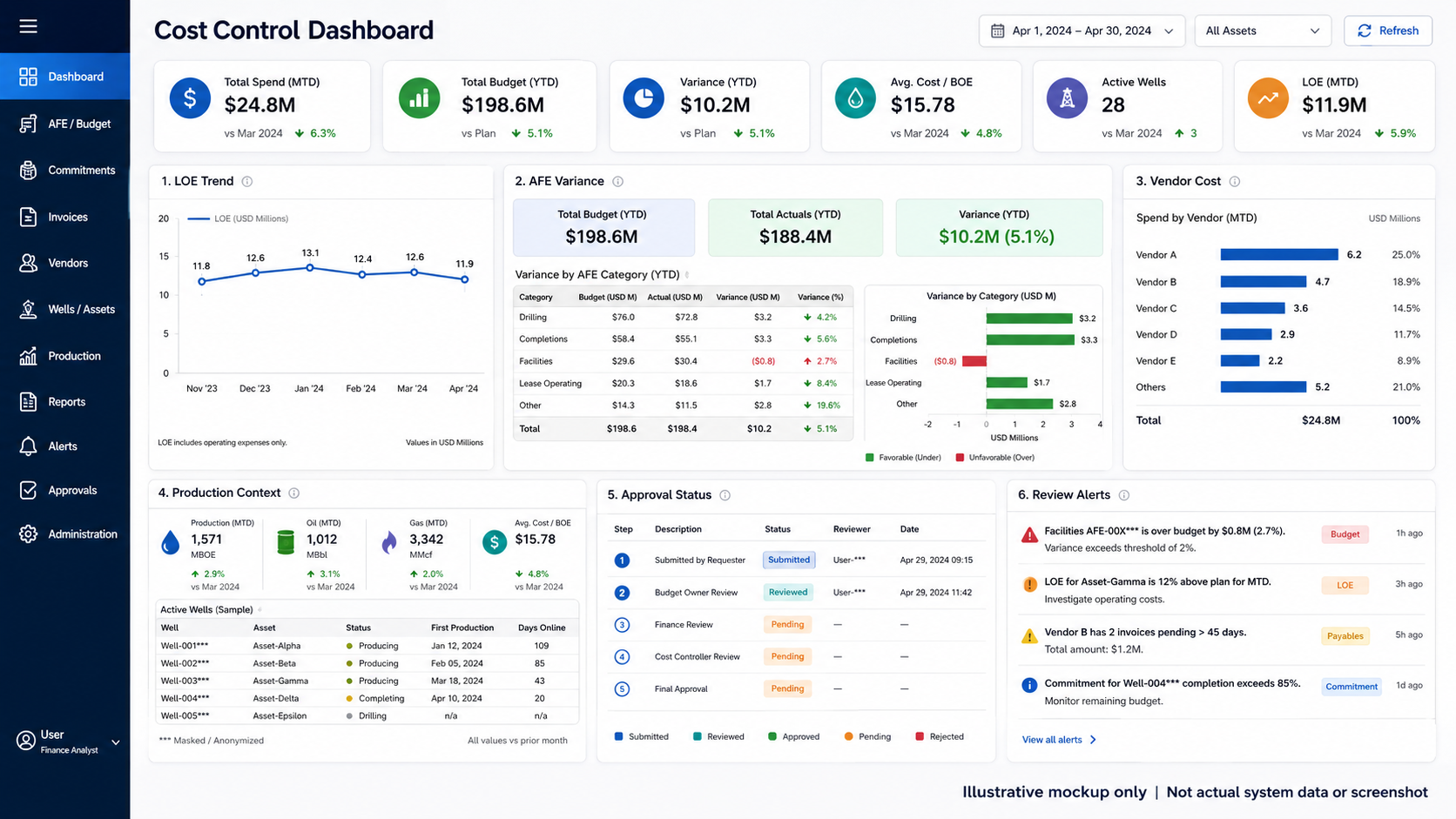
Lease operating expense can move for many reasons. Some changes are normal; others may indicate field issues, coding errors, or preventable cost growth. Operators should review LOE variance by well, lease, vendor, and category.
A simple formula is: LOE Variance Percentage = (Current LOE − Baseline LOE) ÷ Baseline LOE × 100%. If a lease normally runs at $42,000 per month and current LOE reaches $55,000, the variance is $13,000, or 31%. That does not prove a problem, but it should prompt review.
Useful LOE review questions include:
Which category caused the increase?
Which vendor or invoice drove the change?
Did field conditions change?
Is the cost tied to the correct well or lease?
Is this a one-time item or a recurring pattern?
Does the cost align with production performance?
AFE and Field Costs Should Not Be Separate Worlds
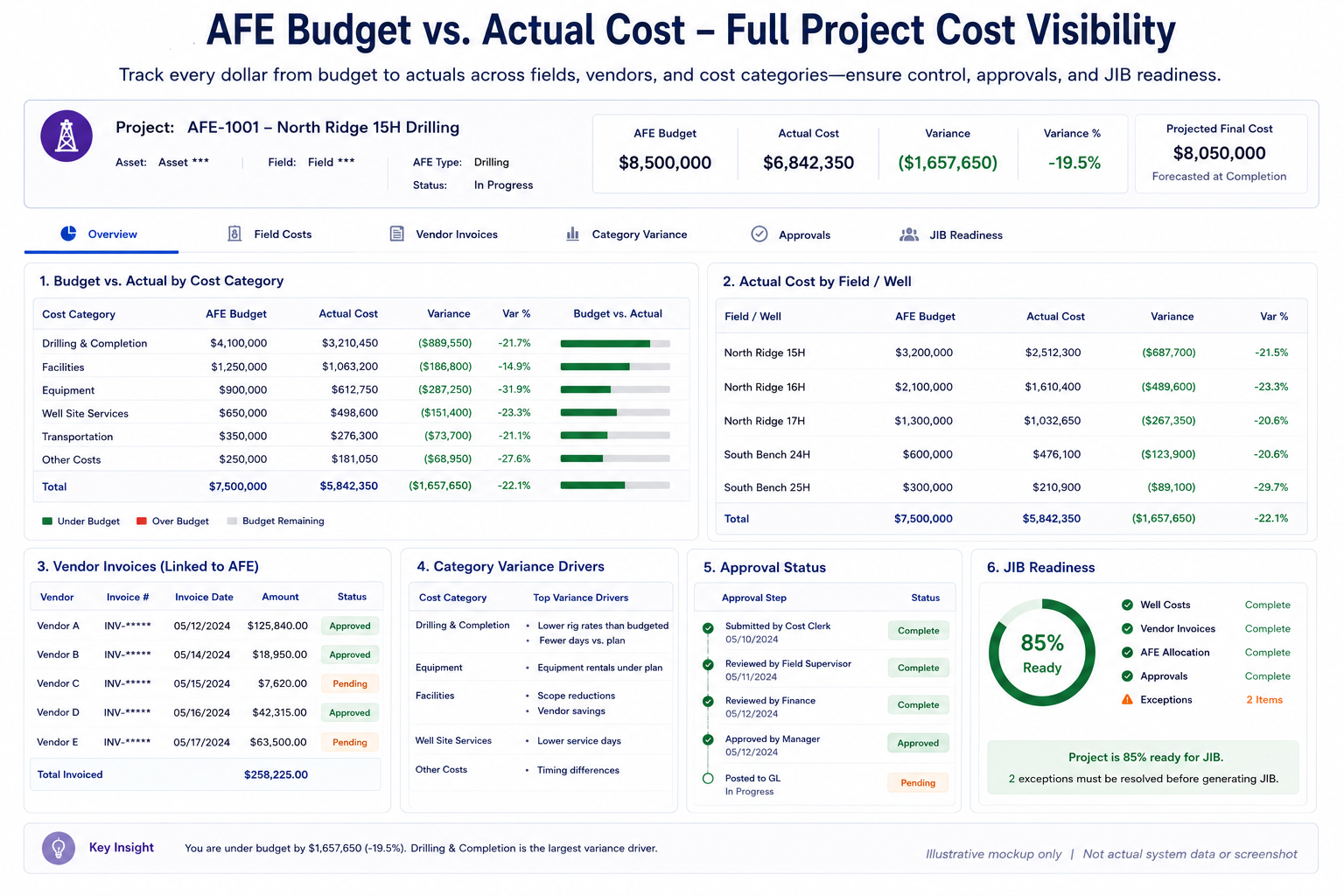
AFE-controlled work and routine field costs often interact. A workover may create vendor invoices, equipment rental, water handling, materials, labor, and follow-up field activity. If these records are separated, the team may struggle to understand total project cost.
Cost control improves when AFE budgets and actual field costs are connected. Operators can compare approved scope against actual spend and identify cost movement by phase or category. This is especially useful before JIB billing or management review.
For example, an AFE may be approved for equipment replacement, but related trucking, labor, or disposal costs may appear in different records. If those costs are not connected to the project context, management may underestimate total cost exposure. A connected workflow helps reveal the full cost picture.
Cost Control Should Support Decisions
The purpose of cost visibility is not only reporting. It should support decisions. Management may need to decide whether to approve additional work, challenge a vendor invoice, adjust operating plans, issue a change explanation, or review asset performance.
A practical cost pressure view can combine cost variance and production movement. For example, if LOE rises 20% while production falls 15%, the asset may require deeper review than a lease where cost rises because production also increased. Context helps teams prioritize attention.
Cost control software should help operators identify:
High-variance costs
Missing approvals
Unusual vendor activity
AFE overruns
Costs without field context
Repeated exceptions
Assets with rising cost and falling production
Vendor and Invoice Review Matter
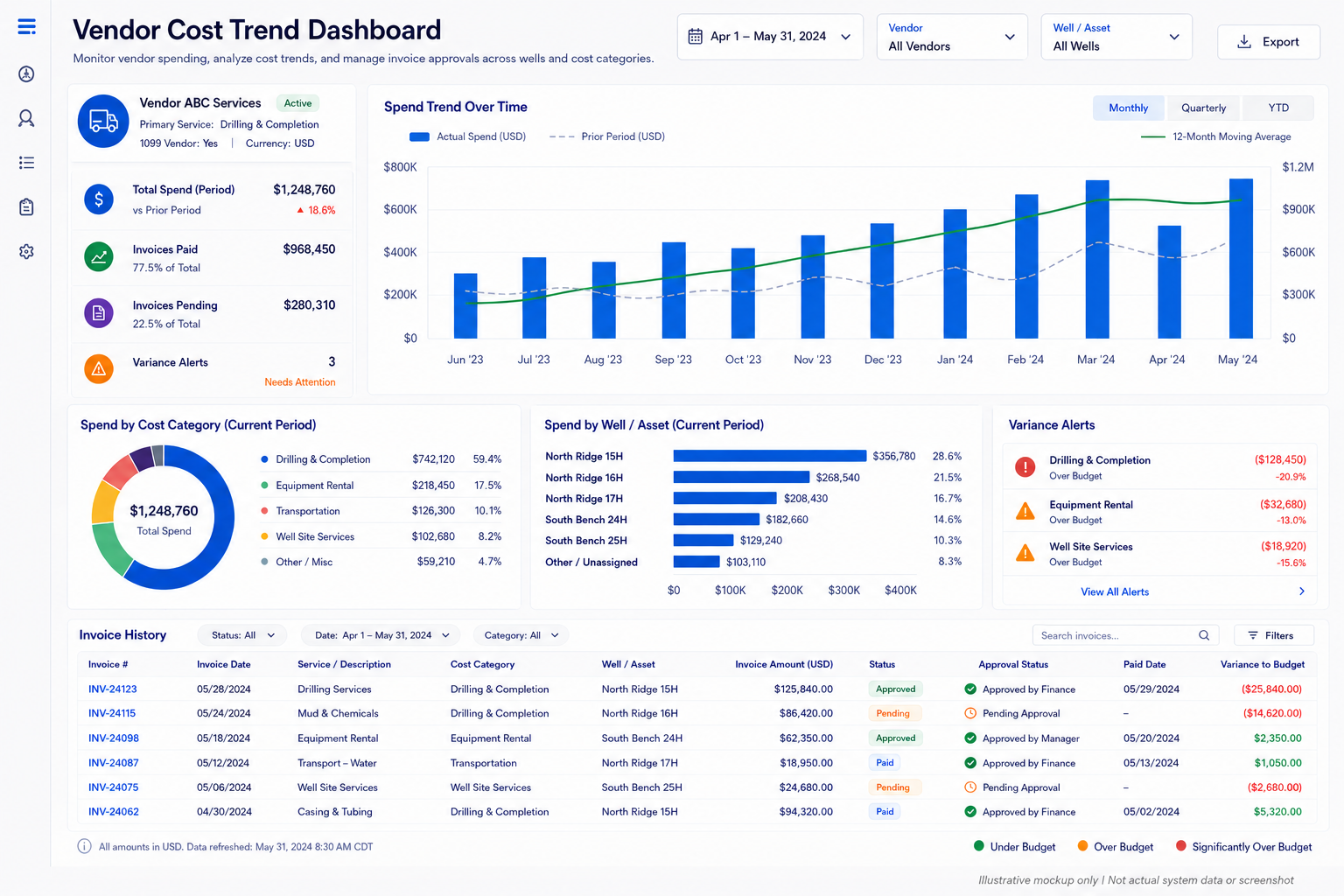
Vendor costs can create hidden cost control issues when invoice patterns are not visible. A vendor may have recurring charges that slowly increase, or one invoice may include services across multiple wells. Without invoice-level review, teams may miss duplicated charges, unclear service dates, or costs assigned to the wrong asset.
Operators should review vendor cost trends over time. A single high invoice may be valid, but repeated increases from the same vendor may require contract review, field explanation, or service-level discussion. Cost control is stronger when the system shows vendor, well, cost category, invoice, and approval status together.
Cost Control Is Also Communication Control
When costs move unexpectedly, teams need to explain the change. Accounting may need to explain it to management. Operators may need to explain it to partners. Field teams may need to explain why additional work was required. If the record is scattered, explanation becomes slow and inconsistent.
A connected cost workflow helps preserve the explanation. It connects invoices, field activity, AFE records, approvals, and cost categories. This makes it easier to answer why a cost changed, who approved it, and whether it should be billed or reviewed further.
Cost control is therefore not only an internal finance discipline. It supports partner communication, management review, and asset-level decision-making. The strongest systems keep the business reason close to the cost record.
Where Petrofly Helps Cost Control
Petrofly can help operators connect cost records, field context, AFE activity, production information, approvals, and reporting in a more practical workflow. This supports teams that need visibility before month-end review or partner questions.
Petrofly can support cost control through:
Cost visibility: Review costs by well, lease, category, vendor, or project.
AFE and field connection: Keep approved budgets closer to actual field cost.
Exception review: Identify unusual cost movement and missing context.
Cloud-based workflow: Give finance, operations, and management a shared view.
Flexible configuration: Adjust reports, dashboards, and review steps around the operator’s needs.
Control Cost Before It Becomes a Surprise
Oil and gas cost control software should help operators understand where costs come from and why they moved. When LOE, AFE costs, field activity, vendor invoices, production context, and approvals are connected, teams can catch cost pressure earlier and make better decisions.
For operators, the practical value is not only reducing spend. It is making cost movement easier to see, review, explain, and act on before it becomes a month-end problem. Petrofly can support teams that want cost control to become part of a connected operating workflow.
For teams reviewing LOE, AFE variance, or field cost visibility, Petrofly can support a focused workflow discussion.