
Oil and Gas 1099 Reporting: How Operators Can Prepare Owner Payment Records Before Year-End

Summary
×Year-End Pressure Starts Earlier
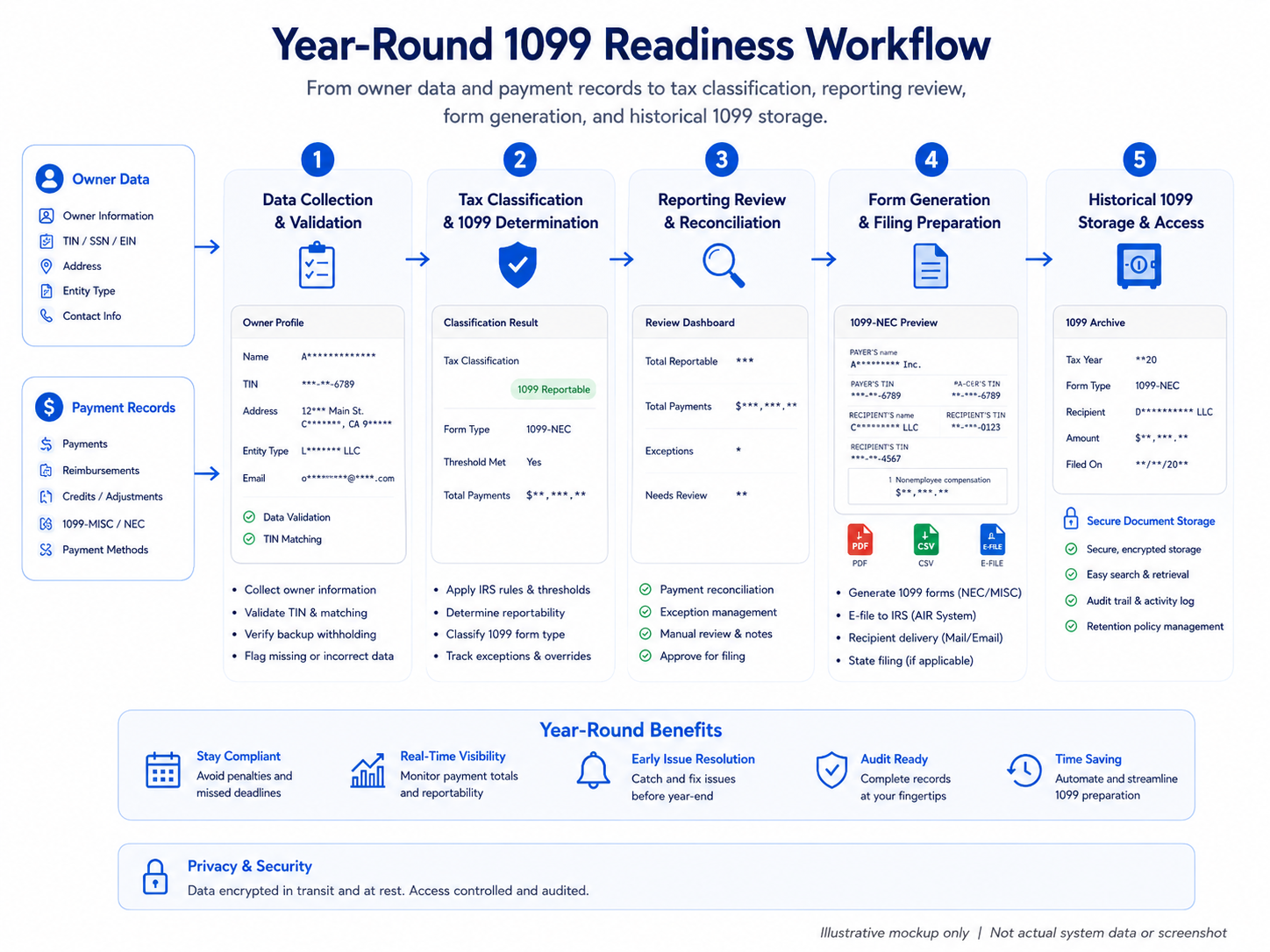
Many operators focus on making royalty or partner payments throughout the year, then discover reporting gaps when 1099 preparation begins. Missing tax IDs, outdated addresses, unclear payment classifications, and incomplete owner records can create concentrated pressure. These issues are easier to resolve during the year than during a compressed year-end reporting window.
1099 reporting depends on the quality of payment and owner data. If the payment record does not connect to the correct owner, tax status, mailing address, and reporting category, the team may need manual review. That review takes time and increases the risk of inconsistency.
A stronger process treats 1099 readiness as part of payment operations. Each payment cycle should improve reporting readiness instead of creating another record to clean later. This makes year-end reporting more predictable and reduces last-minute pressure on accounting and owner relations teams.
Measure 1099 Readiness Before Tax Season
Operators can use a simple readiness formula: 1099 Readiness Rate = Reportable Owners with Complete Tax and Payment Records ÷ Total Reportable Owners × 100%. If there are 2,200 reportable owners and 176 are missing tax ID, mailing address, payment classification, or reporting details, then 2,024 ÷ 2,200 × 100% = 92%.
A 92% readiness rate may look strong, but the remaining 176 exception records can create a large amount of manual work. If each exception takes 15 minutes to review and resolve, the team faces 44 hours of cleanup before reporting can be completed. That does not include owner calls, returned mail, or historical lookup.
The goal is not only to generate forms. It is to maintain owner and payment records so reporting is reviewable, explainable, and easier to reproduce if questions arise later. A strong system should show reporting exceptions before the year closes, not after the reporting team begins final preparation.
Owner Data Drives Reporting Quality
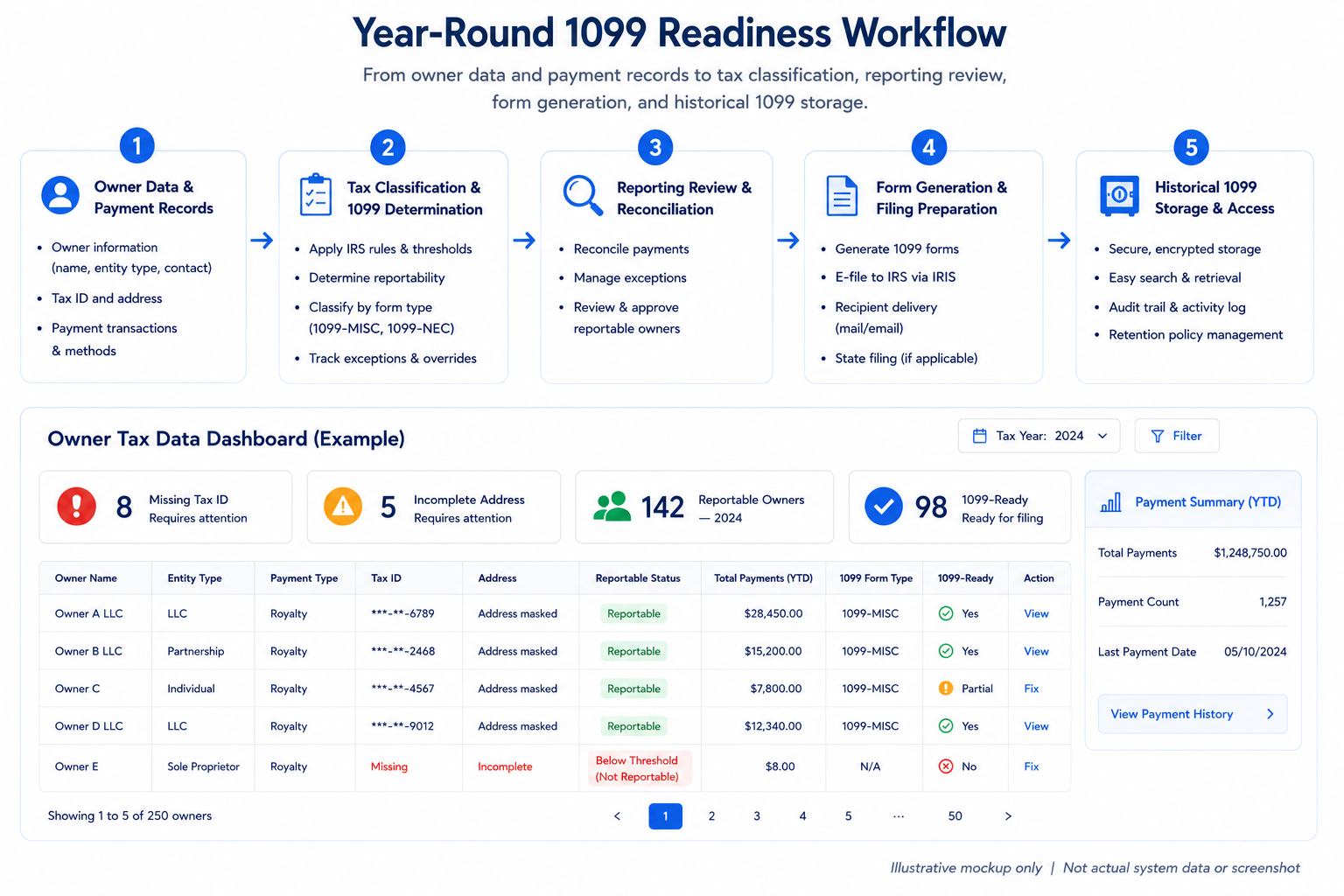
1099 readiness begins with owner records. The system should maintain owner name, tax identification, mailing address, payment classification, entity type, payment history, and prior-year reporting records. If these fields are incomplete, reporting problems can appear even when payments were processed correctly.
Operators should review owner data throughout the year, especially after ownership changes, address updates, returned mail, tax form submissions, or payment holds. Each change should update the reporting record, not only the payment workflow. This helps prevent year-end surprises.
Key data checks include:
Tax ID status
Mailing address
Entity or owner type
Payment classification
Reportable payment amount
Prior-year reporting history
Missing or invalid owner records
Returned mail or communication issues
Payment History Must Be Easy to Trace
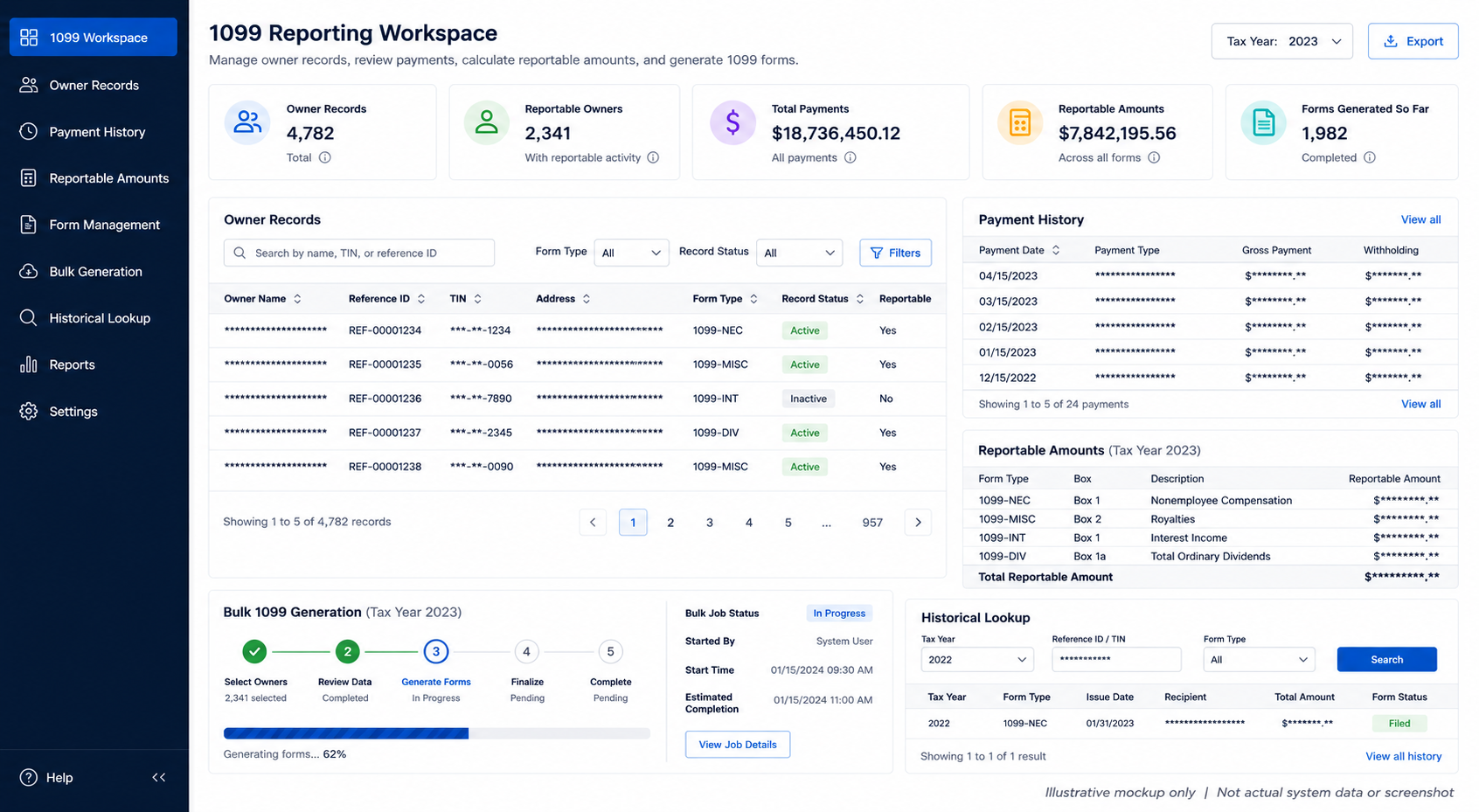
Owners, accountants, and internal teams may ask about payment history after forms are issued. If payment records are difficult to retrieve, 1099 support becomes slow and inconsistent. A strong workflow connects payment records to owner accounts and reporting history.
Operators should be able to answer basic questions quickly. Which payments were included? Which owner record was used? Was the payment classified correctly? Was the form generated, corrected, or reissued? These questions require traceability across payment and reporting records
This is where historical records matter. 1099 reporting is not just a current-year task. Prior-year lookup, correction support, and owner inquiries require long-term record discipline.
Tax Season Cleanup Is Expensive
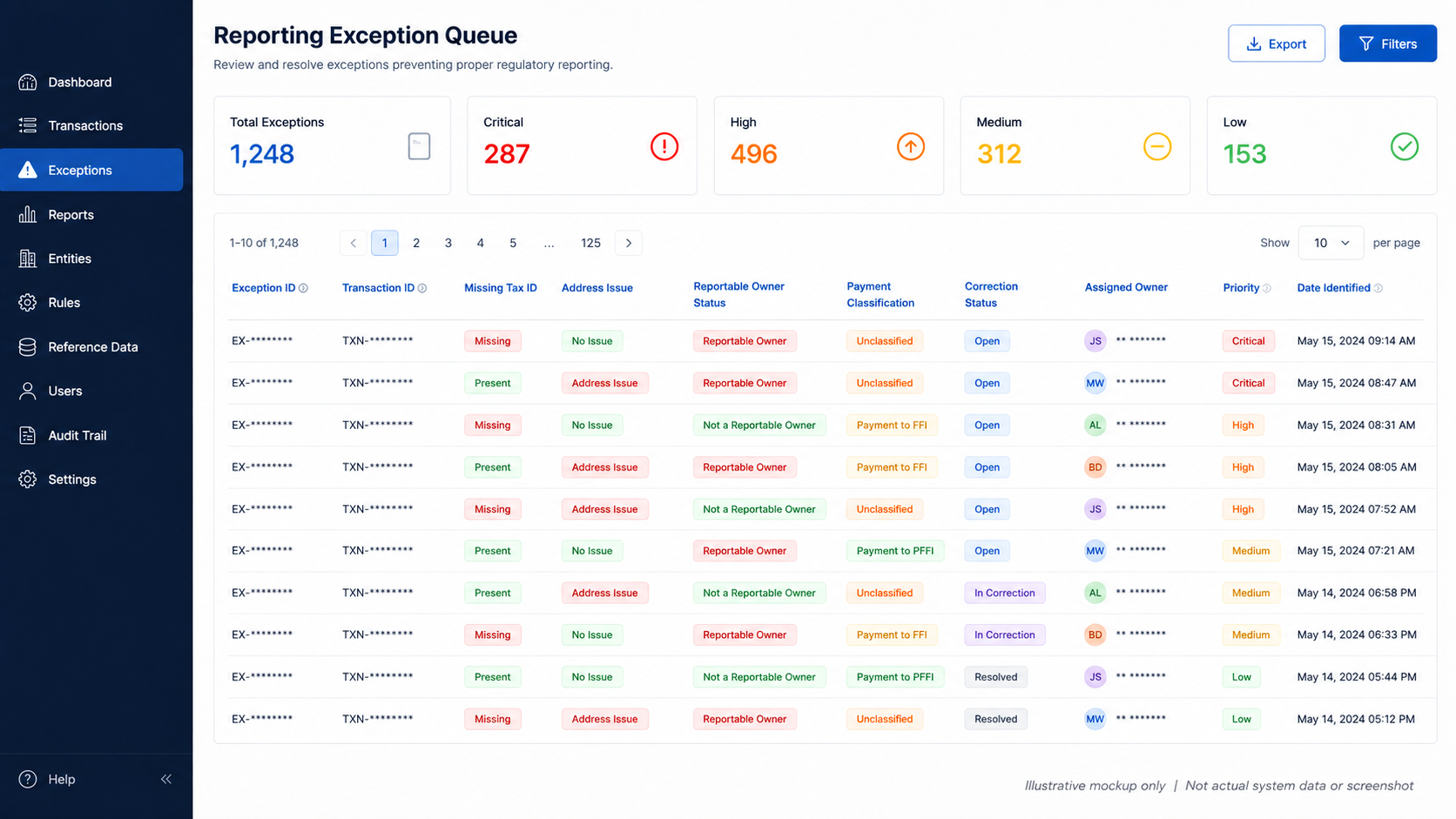
Year-end reporting problems often look small at the record level but large at the workflow level. One missing address may take only a few minutes to correct. Hundreds of missing or inconsistent records can consume days of staff time.
A simple cleanup estimate is: Cleanup Hours = Exception Records × Average Minutes per Exception ÷ 60. If 240 reporting records need review and each takes 12 minutes, the cleanup workload is 240 × 12 ÷ 60 = 48 hours. That is more than one full workweek before forms can be finalized.
This type of workload is avoidable when reporting readiness is managed continuously. Operators do not need to wait until year-end to identify missing owner data, incomplete tax records, or payment classification issues. The same information required for payment operations can support 1099 readiness throughout the year.
1099 Records Should Support Later Questions
After forms are issued, questions may still come from owners, accountants, or internal teams. An owner may ask why a number differs from expected payment history. An accountant may need prior-year records. A corrected form may need explanation. If the reporting record is not connected to payment history, the team may need to rebuild the answer manually.
Operators should preserve generated forms, reporting status, payment basis, and correction history. This is especially important when owners have multiple properties, multiple payment types, or prior-year adjustments. A searchable historical record helps teams respond without relying on individual memory.
The strongest 1099 workflow is not only about annual generation. It also supports review, correction, retrieval, and explanation after year-end. That is what makes the reporting process sustainable across recurring cycles.
How Petrofly Supports Year-End Readiness
Petrofly can help oil and gas teams organize owner payment history, 1099-MISC, 1099-NEC, reporting records, and historical lookup in a more structured workflow. This supports teams that want year-end reporting to be prepared throughout the year, not rushed at the end.
Petrofly can support 1099 readiness through:
Owner payment history: Keep payment records easier to review by owner or period.
1099 support: Organize 1099-MISC, 1099-NEC, and historical reporting records.
Bulk generation: Support repetitive reporting tasks while preserving record context.
Owner data connection: Keep tax and payment information closer to reporting needs.
Flexible setup and support: Adjust reports and review workflows around actual reporting processes.
Prepare Reporting Records Before the Deadline
Oil and gas 1099 reporting becomes more controlled when owner data and payment records are maintained before year-end. Operators should track tax information, mailing addresses, payment classifications, reportable amounts, and historical records throughout the year.
The practical value is less year-end cleanup and stronger reporting confidence. When payment history, owner tax records, generated forms, and prior-year records are connected, teams can answer questions faster and reduce deadline pressure. Petrofly can support teams that want 1099 preparation to become part of a connected owner payment workflow.
For teams reviewing 1099 readiness or owner payment reporting gaps, Petrofly can support a focused workflow discussion.