
Oil and Gas Production Reporting Software: Connecting Field Data, Revenue, and Management Visibility

Summary
×Production Data Is an Operating Signal
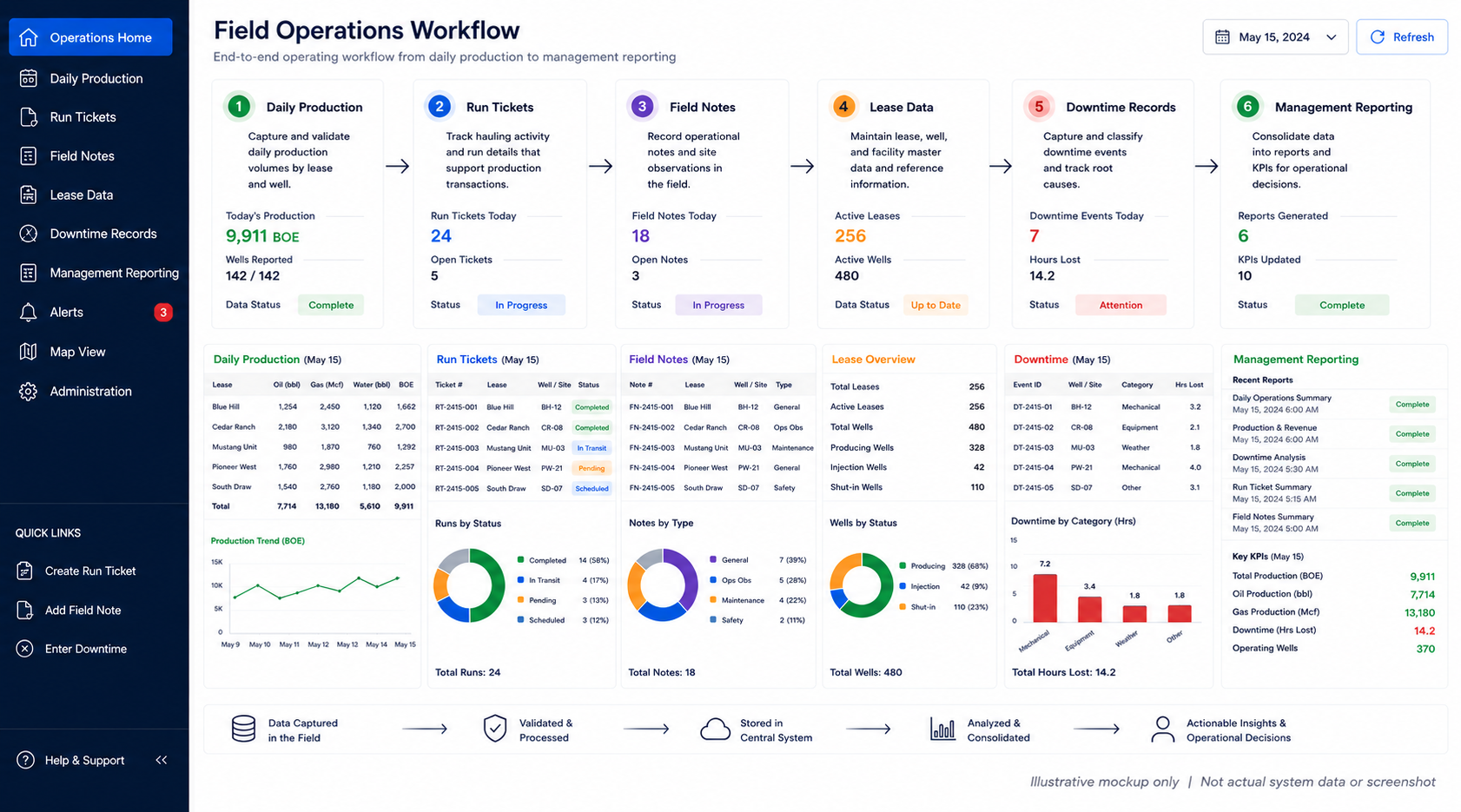
Production reporting is often treated as a monthly reporting requirement, but it is also an operating signal. Daily production, run tickets, downtime notes, chemical usage, lease activity, and field observations can help explain changes in revenue, cost, and well performance. If this data arrives late or remains disconnected, management visibility weakens.
Operators need production data that is timely, structured, and easy to compare. A well with falling volume, rising chemical usage, and increasing field cost may need closer review. A lease with stable production but rising operating expense may point to cost control issues rather than production problems.
Production reporting software should help teams move from record collection to operating interpretation. The question is not only what was produced. The more useful question is what changed, why it changed, and which decision should follow.
Track Production Variance Early
Production changes can be measured with: Production Variance Percentage = (Current Production − Prior Period Production) ÷ Prior Period Production × 100%. If a well produced 1,200 barrels last month and 960 barrels this month, the variance is (960 − 1,200) ÷ 1,200 × 100% = −20%.
A 20% decline does not automatically mean a serious problem. It may reflect downtime, weather, planned maintenance, purchaser timing, or operational intervention. But the decline should be visible early enough for teams to investigate.
Production reporting becomes more valuable when variance is connected to field notes. If the decline is tied to pump repair, facility downtime, or temporary shut-in, management gets a clearer explanation. Without that context, production reports may show movement without meaning.
Production, Cost, and Revenue Belong Together
Production data becomes more useful when connected with cost and revenue context. A well may show stable production but rising field costs. Another may show declining production and declining revenue while LOE remains unchanged. These relationships help operators prioritize review.
A simple operating view is: Net Operating Signal = Revenue Trend − Cost Trend − Production Decline Risk. This is not a formal accounting metric, but it helps management think across related data. Production reporting should support this kind of practical interpretation.
Operators should review:
Production by well, lease, or field
Daily and monthly production trends
Run ticket records
Downtime and field notes
Chemical tracking or lease operating details
Cost and revenue context
Missing or late production data
Asset-level performance indicators
Missing Data Is a Management Issue
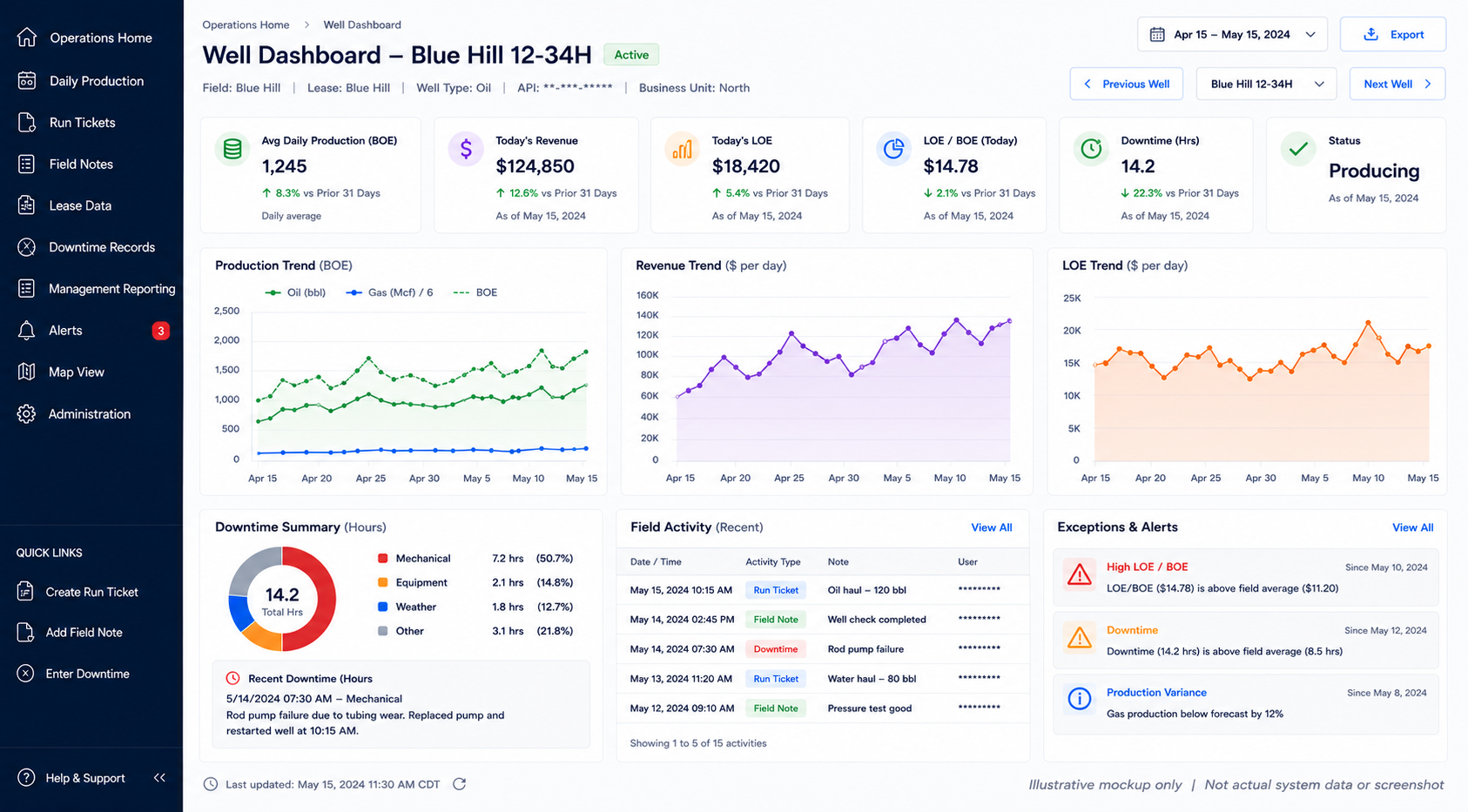
Missing production data can delay reporting, revenue review, and decision-making. If production records are incomplete, finance may need to wait before preparing analysis. Operations may not see performance changes quickly enough. Management may make decisions based on incomplete information.
A useful metric is: Production Reporting Completeness = Submitted Production Records ÷ Expected Production Records × 100%. If an operator expects 1,000 production records in a month and receives 930, the completeness rate is 93%. The missing 70 records may represent real reporting risk if they involve active wells or high-value assets.
Production reporting software should help teams see missing records before the reporting cycle closes. That turns production reporting from a late-month chase into a controlled operating routine. Missing data should have status, owner, reason, and follow-up action.
Run Tickets Add Commercial Context
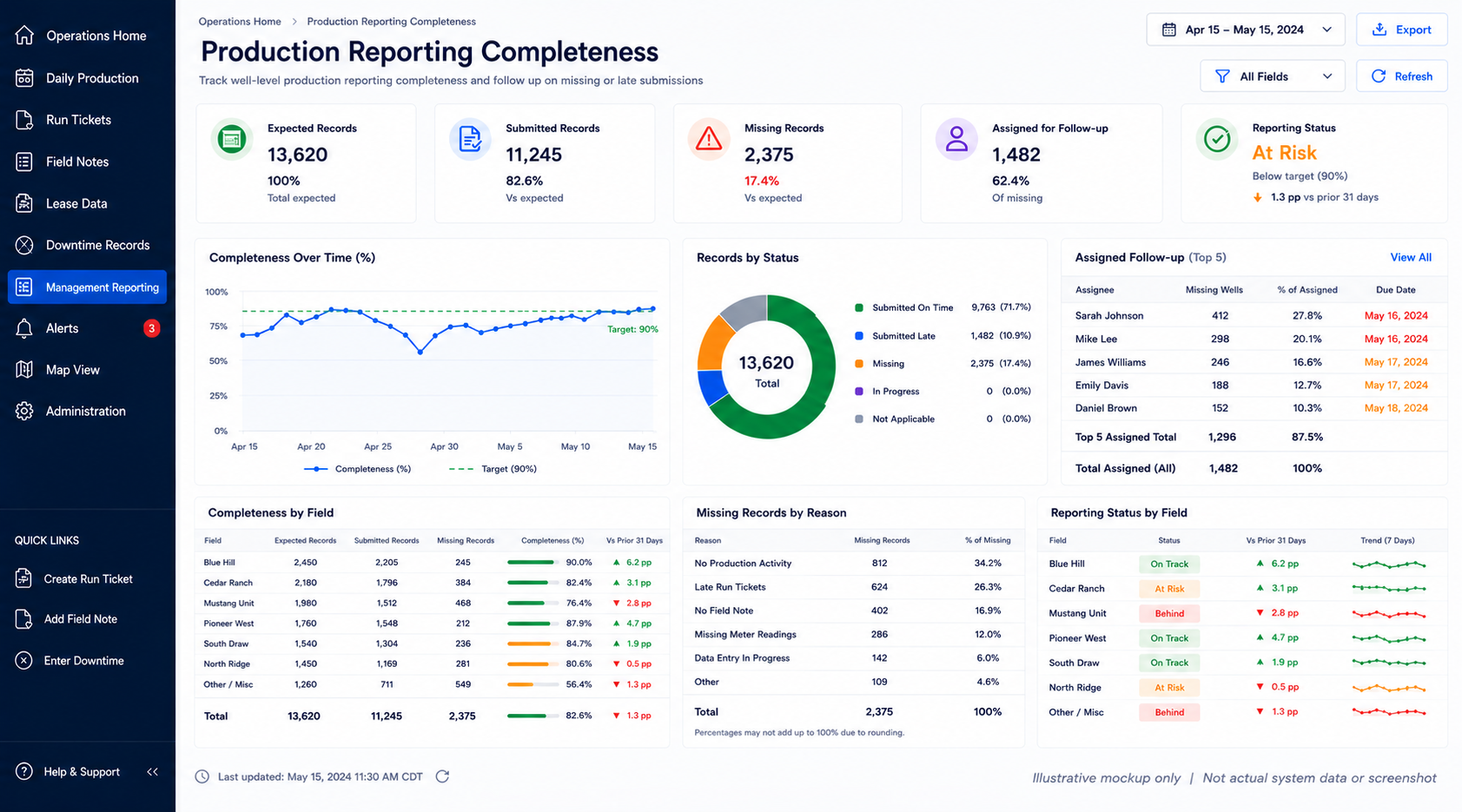
Run tickets help connect production activity with sales and revenue records. They may show product movement, volume, purchaser, date, tank, lease, or field information. When run tickets are disconnected from production reporting, finance and operations may have to reconcile data manually.
For example, reported oil production may not match expected revenue if run ticket timing, purchaser statements, or production month allocation differs. That does not necessarily mean there is an error. It means the team needs a traceable way to review production movement and related revenue context.
Production reporting software should keep run ticket information close to production and revenue review. This helps teams explain timing differences, missing records, and volume movement without rebuilding the full record from separate files.
Production Reporting Should Support Management Decisions
A production report should not only show historical output. It should help management understand operating priorities. Wells with declining output, repeated downtime, rising operating cost, or missing records may need attention before month-end reporting.
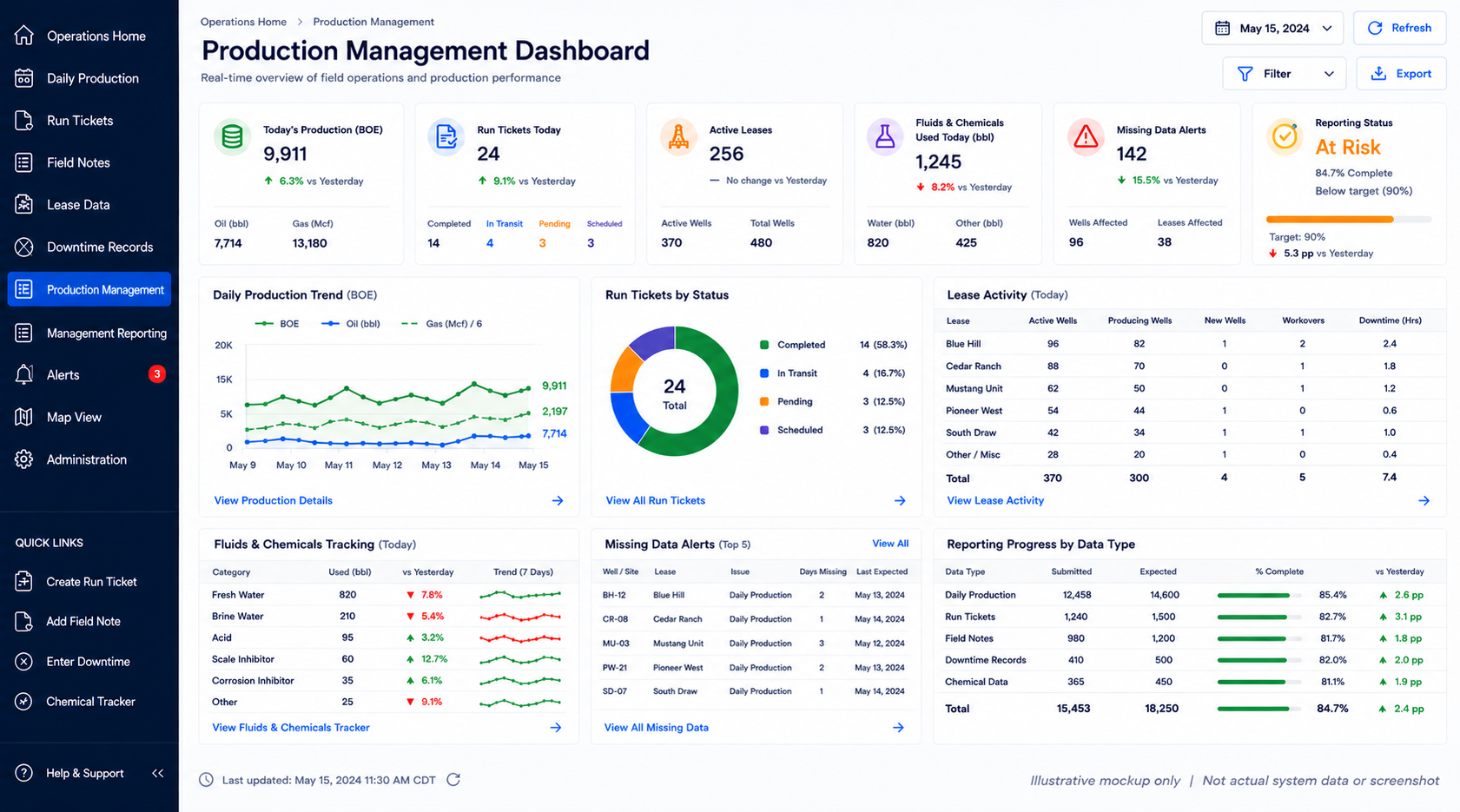
Management views should be simple enough to scan and detailed enough to support action. A dashboard may show production trend, missing records, downtime events, run ticket status, LOE movement, and revenue context. The best reporting view helps users decide where to investigate first.
For operators, this turns production reporting into a daily operating tool. Instead of waiting for monthly reports, teams can see changes earlier and connect field data with financial visibility.
Where Petrofly Connects Production Reporting
Petrofly can help upstream teams organize production management, run tickets, daily production, chemical tracking, lease operating information, and reporting views in a more connected environment. This supports operators that want production records to contribute to better field and financial visibility.
Petrofly can support production reporting through:
Production visibility: Track production data across wells, leases, or fields.
Field context: Connect run tickets, daily production, and operating details.
Reporting support: Help teams turn daily records into management visibility.
Cloud-based access: Give authorized users a shared operating view.
Configurable setup: Adjust fields, dashboards, and reports around actual workflows.
Make Production Data Useful Before Month-End
Production reporting software helps operators turn field data into useful operating visibility. When production volumes, run tickets, field notes, cost context, and reporting status are connected, teams can identify production changes, missing records, and performance questions earlier.
The practical value is stronger decision timing. Production data should not become useful only after monthly reporting is complete. Petrofly can support upstream operators that want production reporting to become part of a more connected operating workflow.
For teams looking to connect production records with cost, revenue, and management visibility, Petrofly can support a focused workflow discussion.